
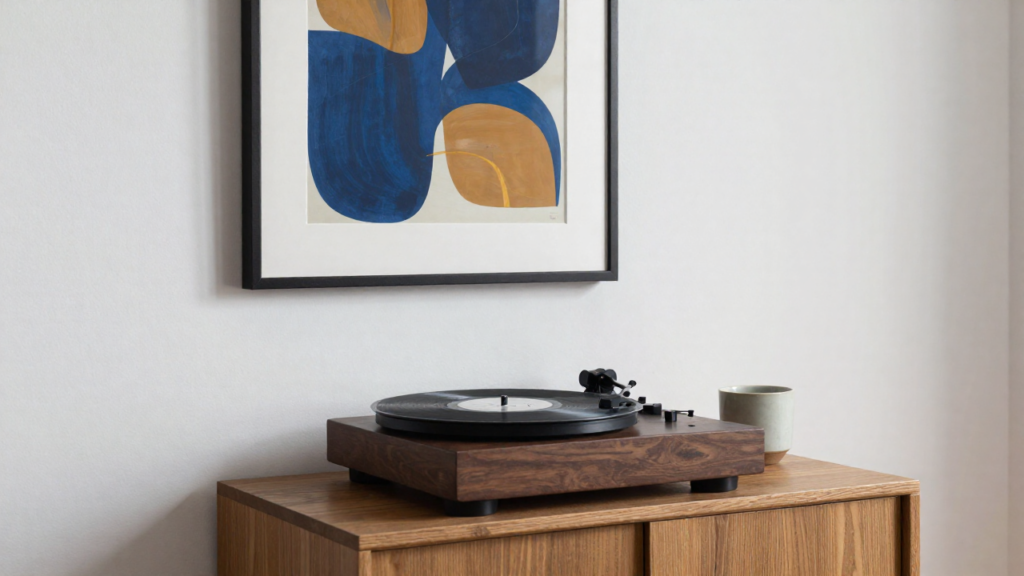
The best music wall art gift starts with a connection you know is meaningful: an artist they love, an album they return to, or a song you associate with them. Then ask whether they would enjoy seeing that reference on their wall. A design that suits both their music taste and their space is a better bet than one chosen solely because you like it.
Start with what you know about their music
Think beyond the broad label of “music lover.” Someone may enjoy classic rock but feel much more connected to one band than another. Even within a favorite artist’s work, a particular album or song can carry more meaning than the artist’s name alone.
Look for clues you already have: a record they regularly play, a concert they still talk about, or a song they’ve mentioned as a favorite. If your evidence is simply that they once listened to a band, treat that as a starting point rather than a firm answer.
When you’re unsure, ask a question that leaves room for a surprise:
- “Which album do you always come back to?”
- “Is there a band you’d put on your wall?”
- “Do you like art that makes a music reference obvious, or something more subtle?”
A friend or household member may also be able to help, particularly if the recipient already has a music-art collection. Check for duplicates when you can: a different reference may feel more thoughtful than a second version of something they already display.
Match the reference to the person, not just the genre
A music reference can be a tribute to an artist, a nod to a particular work, or an image associated with a band. The right choice depends on what the recipient recognizes and enjoys—not on which reference is most famous.
For a Pink Floyd fan who has a connection to *Wish You Were Here*, the Wish You Were Here handshake wall art gives you an album reference to build the gift around. It makes the most sense when you know that album matters to them, rather than merely knowing they like a few Pink Floyd songs.

For someone who specifically likes “Another Brick in the Wall,” the Another Brick in the Wall classroom-themed art offers a different reference. Consider whether the recipient would enjoy that theme as decor, especially if the piece might go in a shared room.

A Led Zeppelin fan who likes the band’s Icarus association might prefer the Led Zeppelin Icarus wall art. Here, too, the useful question is whether the reference means something to the recipient—not whether it would be recognizable to everyone else.
These are separate wall-art choices, not a set. If none matches what you know about the recipient, keep looking. A person who plays an instrument or enjoys several genres might prefer a more general music motif, such as instrument or sheet-music art, to a tribute to one artist. That is a direction to explore, not a substitute for knowing their taste.
Picture the art in their space
Musical taste is only half the decision. Some people want a prominent tribute in a listening area; others prefer art that blends into a bedroom, office, or shared living room. Think about the walls they already use. Do they display posters, keep a few carefully chosen pieces, or leave most of their walls open?
If you know where the gift might go, measure the available wall area and note nearby furniture, shelves, switches, and doorways. Compare those measurements with the dimensions on the listing. Leave room around the proposed piece rather than treating every inch of blank wall as usable space.
A way to test proportions is to cut a piece of scrap paper to the intended dimensions and hold it against the wall. Step back and consider how it looks beside the surrounding furniture and artwork. For art above a sofa or desk, you could start by testing a piece around two-thirds of the furniture’s width, then adjust by eye. That proportion is a guideline, not a requirement.
Also consider how much visual attention the recipient likes their art to draw. A music reference they enjoy listening to might not be one they want as the focal point of a shared room. If you cannot see the space or ask about it, avoid promising that the gift will be perfect for a particular wall. Let the recipient decide where it belongs.
Decide how much of a surprise to keep
A full surprise works best when you know both the music connection and the recipient’s display preferences. If you know the artist but not the style, preserve some mystery by asking about art generally: “Would you rather hang a music poster in your office or keep that room more neutral?”
When both the reference and the available space are uncertain, invite them into the choice. You might share two or three possible directions and ask which they would actually hang. That gives up some surprise, but it reduces the chance of giving them something meaningful that does not feel at home on their wall.
For a shared space, consider the other people who use the room. A favorite band may be an easy choice for a personal workspace, while a living room may call for a conversation about everyone’s preferences. If the recipient is between homes or you do not know their plans, it is reasonable to ask whether wall art is something they want before choosing a design.
Check the listing and add a personal note
Before buying, review the individual listing for the details you need, including dimensions and what is included. Think about whether the recipient would need anything separately to display the art, and allow for that in your budget. If you are unsure how they prefer to display wall art, leaving that choice to them may be more useful than guessing.
The personal touch does not have to be printed on the artwork. Add a handwritten note explaining the connection: perhaps the album reminds you of a conversation you shared, or the artist is one they introduced you to. Keep it specific and genuine. A few words about why you chose the piece can make a single work of art feel like a gift selected for them.