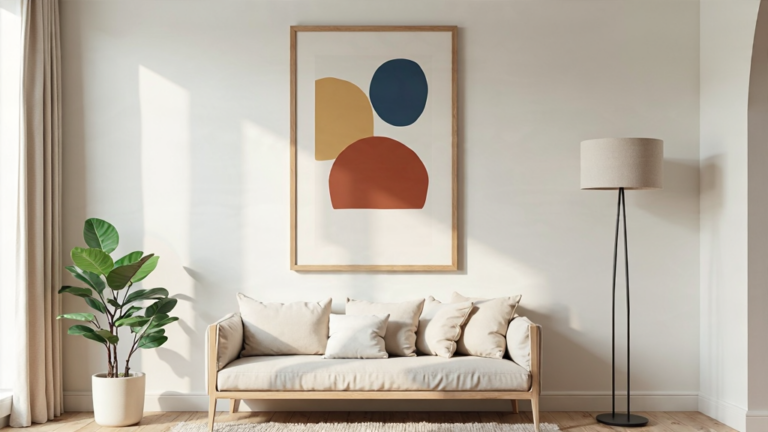
For a fresh-looking room, consider a statement piece, nature-inspired art, or a playful print built around a subject you enjoy. These are decorating directions to explore, not a verified ranking of what’s most popular right now. The best choice is one that suits your space and still appeals to you after the novelty of a trend wears off.
Start by deciding what you want the art to do: create a focal point, make a room feel calmer, or give an everyday corner some personality. Then test the scale and placement before buying.
Four directions to consider
One statement piece gives the eye somewhere to land. It can work above a dining area or on a living room wall where the surrounding furniture is fairly simple. The tradeoff is that a single piece carries the arrangement on its own, so its subject and proportions need to feel right to you. A statement piece doesn’t have to be loud; a quieter image can stand out through its scale or placement.
Nature-inspired art offers a way to introduce a calmer subject. Think about whether you prefer a recognizable landscape, botanical imagery, or a looser interpretation of natural shapes. A detailed scene may reward a closer look, while a simpler image can be easier to take in from across the room. Choose based on how you use the space rather than assuming one is inherently better.
Subject-led prints make an area feel personal. Food and drink themes are natural starting points for a kitchen or dining nook, but a landscape or abstract image can work there too. A familiar subject can make a room feel inviting; the tradeoff is that a very specific theme may feel limiting if you later change the room’s purpose or decor.
An informal grouping gives you room to combine pieces over time. It can make a large blank wall feel lively and lets you mix subjects you enjoy. It also takes more planning than hanging one piece. If the room already has open shelves, patterned surfaces, and plenty of objects on display, a simpler arrangement may be easier on the eye.
Match the art to the wall, not just the room
Look at the area you want to decorate from your usual viewing position. A wall may seem large when you stand directly in front of it but feel crowded from the doorway because of nearby cabinets, furniture, or shelves.
For a narrow section between a cabinet and a doorway, one piece may be enough. Above a dining table or sofa, a broader piece or a grouping may be easier to relate to the furniture below. If the furniture sits off-center on the wall, try centering the art over the furniture rather than automatically centering it on the entire wall.
Also consider what is already competing for attention. A detailed print next to busy shelving can make the whole area feel active. That may be exactly the effect you want; if not, try a simpler subject or move the art to a clearer section of wall.
Decide between one piece and a grouping
Choose one piece when you want a clear focal point, have limited wall space, or prefer a calmer arrangement. It is also a useful starting point if you are unsure how much visual activity the room can handle. You can leave room to add something later without making that commitment now.
Choose a grouping when you have a wider area to work with or want to display several subjects. Before buying, pick one connecting idea: perhaps a shared subject, a similar frame style, or an arrangement with consistent spacing. The pieces do not all have to match, but a connection helps them read as a deliberate display.
Plan the entire grouping as a shape rather than treating each item separately. Lay paper templates on the floor first, then try the arrangement on the wall. Leave some open space around the outside so the display does not look squeezed against a doorway or shelf. If you keep adding pieces just to fill gaps, try removing one and compare the result.
Give a kitchen or bar-cart corner a theme
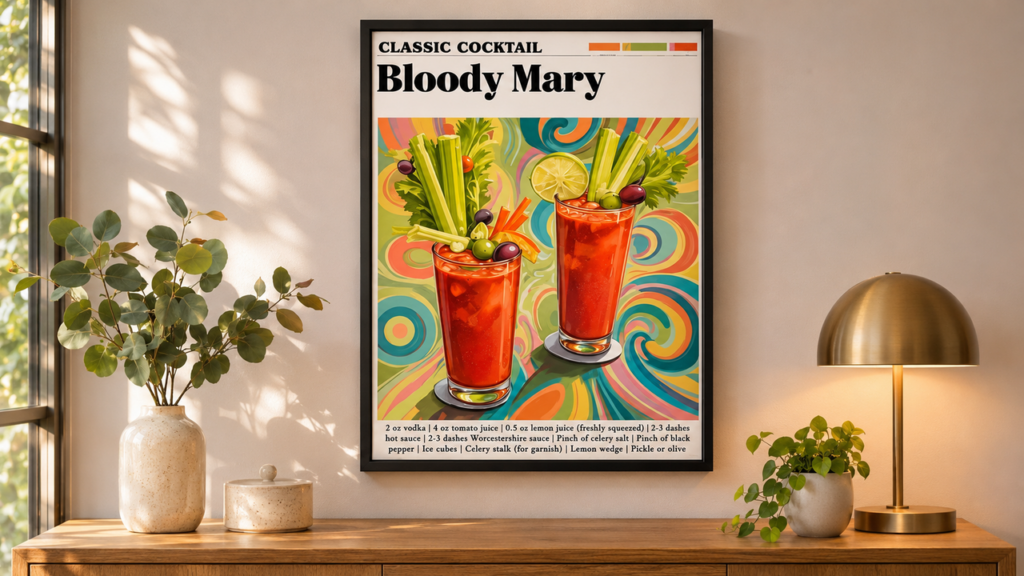
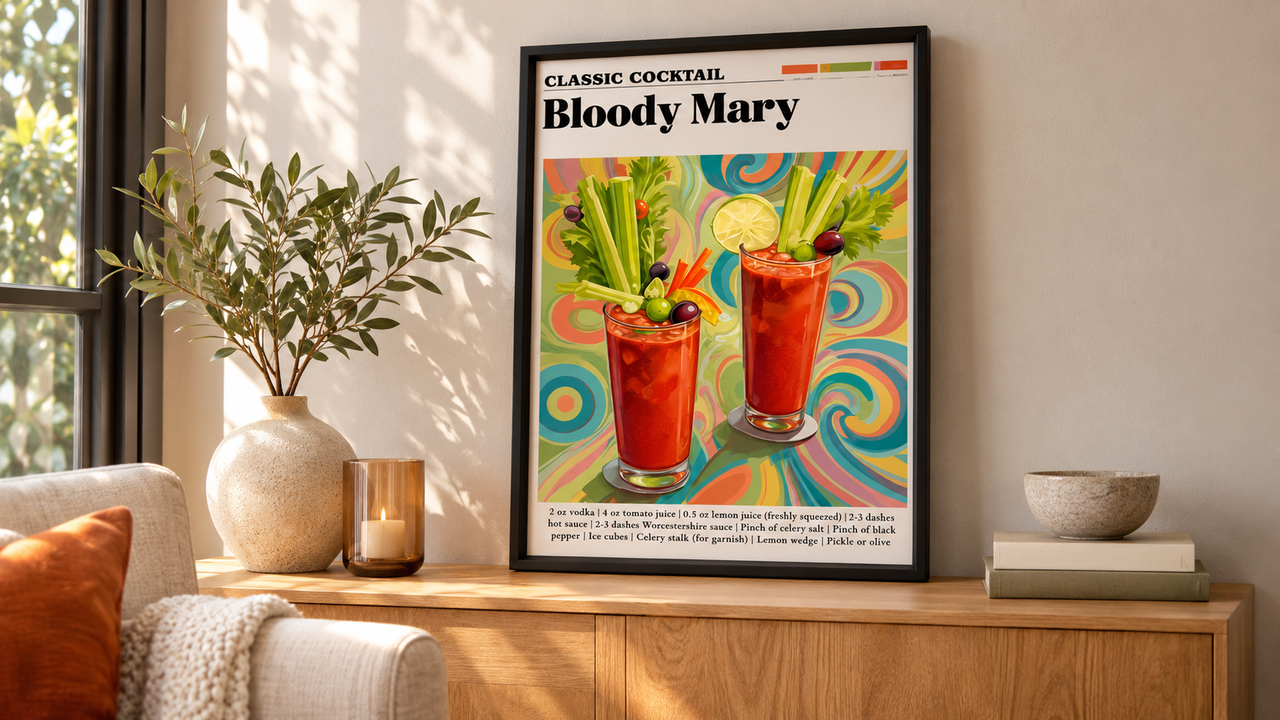
A cocktail subject can be a lighthearted choice above a bar cart, near a dining nook, or on a clear wall visible from the kitchen. Pick a subject you actually enjoy, rather than feeling obliged to make every piece of art describe the room it is in.
A Bloody Mary print is one individual option for a drink-themed area. An espresso martini poster offers a different cocktail subject for a kitchen or bar setting. Each is a single wall art product. Consider either on its own, or plan additional pieces separately if you want a grouping.


You can use the same approach without a cocktail theme. A food-related image might reinforce a dining nook, while a landscape could be a better fit if you want the room to feel less themed. In either case, check whether the subject is enjoyable from the spot where you usually sit or stand.
Test the scale before you buy
A piece can appeal to you on a screen and still feel awkward on your wall. Make a paper template using the footprint you are considering, including any frame you plan to use. Temporarily position it on the wall, then step back and look from the doorway, dining table, or another usual viewing spot.
Compare at least two positions. Move the template a little higher or lower, or try centering it over the furniture instead of the wall. If you are considering a grouping, use a template for each piece and check the overall shape as well as the spaces between them.
Ask yourself:
- Does the arrangement have a clear relationship to the furniture or feature beneath it?
- Is there breathing room around it, or does it feel squeezed between cabinets, shelves, or doorways?
- Can you enjoy the subject from where you will usually see it?
- Would one piece feel calmer, or would a wider arrangement make better use of the wall?
For more help with a compact space, see how to choose wall art for a small room.
Check the setting and listing
In a kitchen, consider the practical surroundings as well as the view. Keep art clear of areas where it could interfere with cooking, cleaning, opening doors, or moving around. Think about exposure to heat, steam, and splashes when deciding whether a wall is suitable; a spot that looks perfect may be less appealing if it is difficult to keep clear during everyday use.
Before ordering, review the individual listing for the available options and details relevant to your plan. Check that the item will fit the space you tested, and account for any framing you intend to use. If you are building a grouping, make sure each separately chosen piece works in the overall layout.
The final test is simple: would you still want to see the subject every day if you stopped thinking of it as a trend? If the answer is yes and the placement works, you have a stronger reason to choose it than popularity alone.