Pack each personalized ornament in its own cushioned space, prevent it from knocking against other items, and keep the box on a dry indoor shelf away from direct sunlight. Check any instructions that came with the ornament first. If you’re unsure what can safely touch a decorated finish, avoid pressing wrapping or tape against it and seek item-specific guidance.
The goal is to protect each keepsake from bumps and pressure while making it easy to find and inspect next holiday. You don’t need a large collection or a specialized organizer to get started; a sturdy box with separate spaces can work well.
Choose a container that fits
A compartmented ornament box is convenient for several keepsakes. Look for spaces that leave room for cushioning without forcing anything into place. Dividers should keep neighboring ornaments apart without pressing against their edges or decorative details.
For one or two pieces, a small, sturdy box with homemade cardboard dividers can be a practical alternative. Give an awkwardly shaped or particularly delicate ornament its own box if a shared compartment would be too tight. A larger box is not automatically better: empty space needs to be managed so the contents don’t slide around.
Before putting the box away, check that:
- The lid closes without touching or pressing on the ornaments.
- Each ornament has a separate space and cannot collide with another.
- Cushioning limits movement without squeezing the contents.
- The container can sit on its intended shelf without being crushed by other items.
Gently tilt the closed box a little. If you hear or feel contents shifting, set it down, open it and adjust the cushioning. Don’t shake the box to test it.
Pack each ornament separately
Clear a flat surface before you begin, and put the container close by so you don’t have to carry ornaments across the room one at a time. Handle each piece by its main body rather than relying on a ribbon, loop or hook to support it. Look for loose parts before packing, and avoid pulling on anything that seems insecure.
If a metal hook detaches easily, you can remove it and put it in a labeled envelope or separate compartment. If a hanger is fixed or difficult to remove, leave it in place. Arrange it so it won’t rub against the ornament or a neighboring piece; don’t force it apart.
Follow any item-specific packing instructions you have. Otherwise, use a gentle approach:
- Use soft cushioning around each ornament to limit movement, without winding it tightly around the piece.
- Keep tape, sticky labels and rubber bands off personalized or decorated surfaces.
- Leave room around protruding details rather than pressing them flat to make the lid close.
- If you don’t know whether a wrapping material is safe against a finish, don’t assume it is. Cushion around the edges without pressing on the decorated area, and seek item-specific guidance if contact can’t be avoided.
A supportive cradle should hold the ornament in place without putting pressure on a vulnerable detail. Check that the ornament stays separated from dividers and other hard edges when the box is moved.
Should you keep the original packaging?
Original packaging may be useful if the ornament fits comfortably and the inserts still hold it securely. Check for crushed areas, loose inserts and places where the lid or packaging presses on a decoration. If the piece moves around or no longer fits comfortably, choose another compartment instead. Keep any supplied instructions with the box so they’re easy to find next year.
Pick a practical storage spot
Choose a dry indoor location that is easy to reach, away from direct sunlight and out of the path of everyday bumps. An interior closet shelf can be a practical choice. Keep the box where it is unlikely to be exposed to a spill, and don’t stack heavy bins on top of it.
If you’re considering an attic, garage or basement, check the conditions rather than assuming the space is suitable. For sentimental keepsakes, a spot prone to leaks, dampness or large temperature changes is not a good first choice. If you have no alternative, use the most protected location available and check the box periodically.
In an apartment or small closet, a compact box on an accessible shelf can be easier to retrieve than a large bin buried behind other decorations. If several boxes must share a shelf, give the ornament box a place where it won’t bear the weight of the others. You should be able to lift it out without pulling on the boxes above it.
Label the container, not the keepsake
A label on the outside saves you from opening every box next season. Note the contents or occasion on the container rather than attaching a label to the ornament. If the box has several compartments, tuck a short inventory inside the lid.
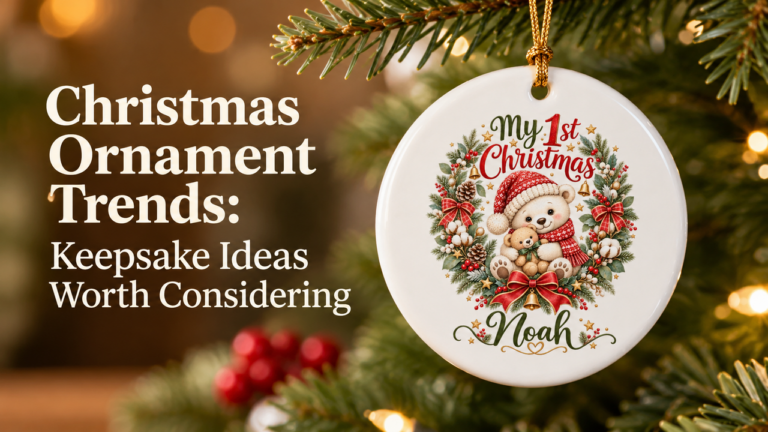
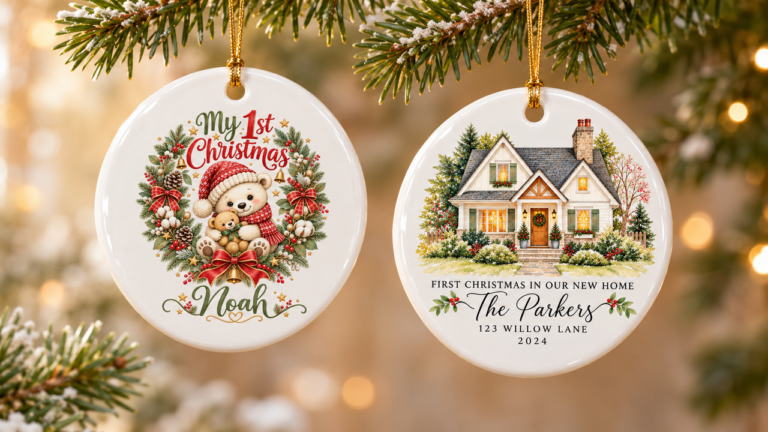
For example, you might reserve and label separate spaces for a baby’s first Christmas ornament and a personalized new-home ornament. An inventory such as “baby keepsake—left compartment” or “new home—small box inside” tells you where to look without putting anything sticky on the keepsake. If you’re shopping for either ornament, review the listing for its available personalization options.

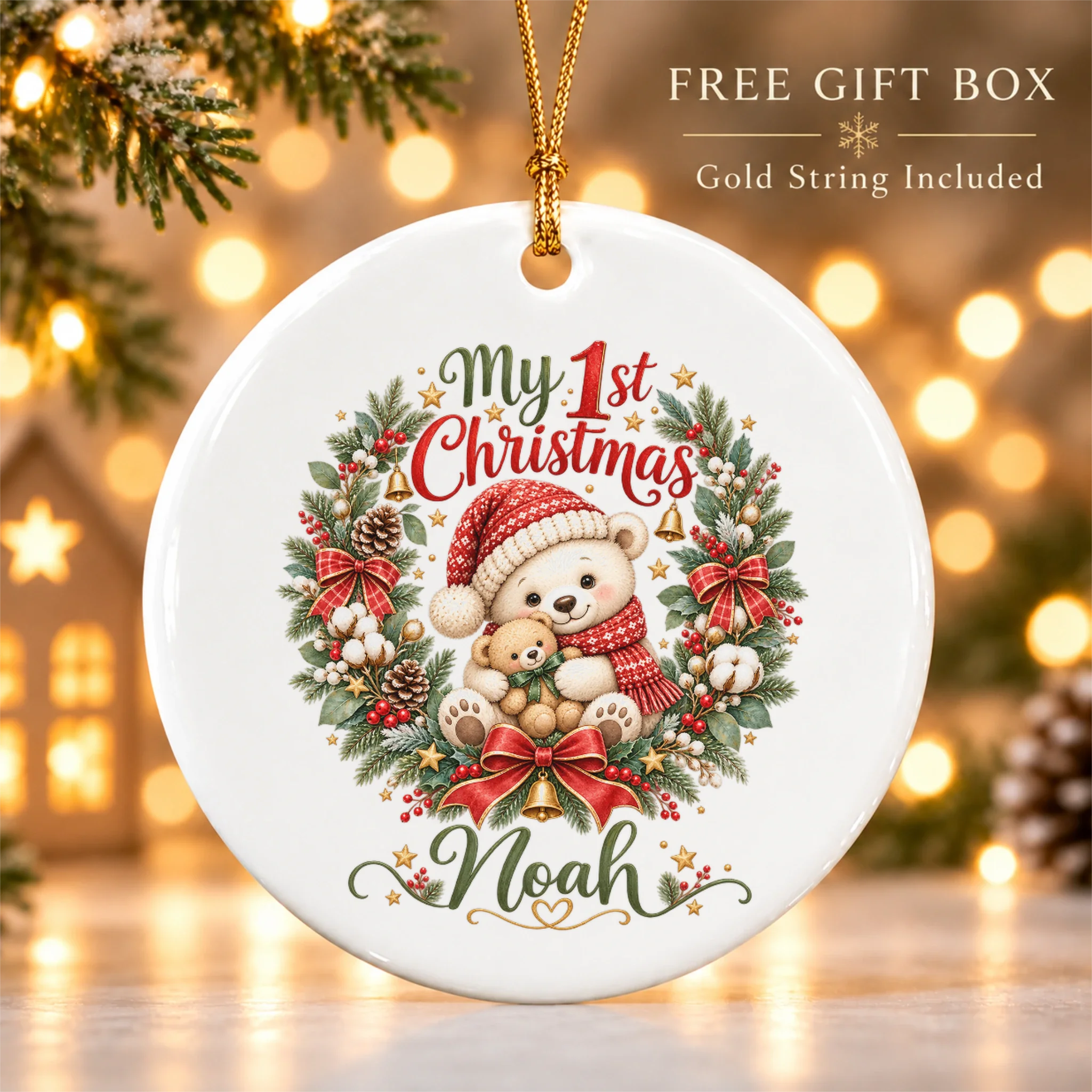
Mark which side of the box should stay up, especially if someone else may move it. When packing decorations at the end of the season, keep the inventory with the container instead of relying on a label that might fall off.
Check before you hang them again
Bring the box to a clear table before opening it. Lift each ornament out by its body, remove the cushioning gently and look for a loose hanger, damaged edge or other change. Check that the loop or hook is secure before hanging the piece.
If an ornament looks damaged, set it aside in its own protected space rather than putting it on the tree immediately. Don’t assume that glue, polish, water or a household cleaner is appropriate for an unfamiliar finish. Check the item’s instructions, and consider asking a conservator for advice before attempting to repair a particularly sentimental or delicate piece.
At the end of the holiday, return each ornament to its labeled compartment. Check the box and cushioning again rather than assuming they’re still holding everything securely; adjust or replace anything that no longer provides a comfortable fit.