
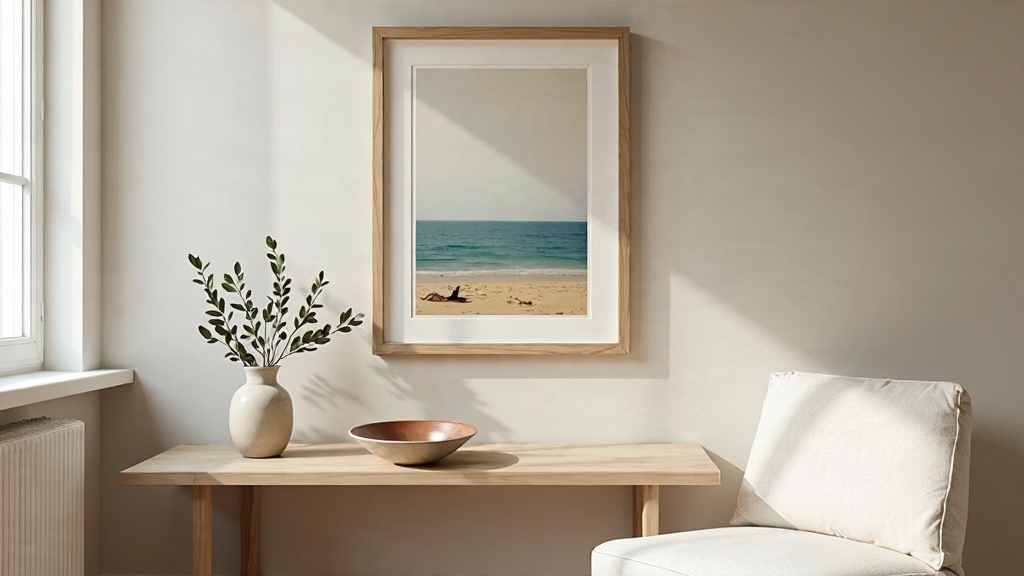
Start with a place that means something to you, then choose art that works in the room where you’ll see it. A favorite destination, a shared trip, or somewhere you hope to visit can all be good starting points. Before buying, measure the available space and decide whether you want one focal piece or a grouping that tells a broader story.
Choose a place with a reason behind it
You don’t need to have visited a destination for it to belong on your wall. Ask yourself what you want the art to bring to mind: a memorable journey, a connection to someone, or the anticipation of a future trip. Then consider how directly you want the subject to communicate that idea.
- A recognizable landmark can make the destination immediately clear. Paris Eiffel Tower wall art could suit a room centered on a Paris connection or a shared travel memory.
- A view associated with an experience can suggest an aspect of a place. Venice canal wall art may appeal if the idea of exploring canals feels more meaningful than highlighting a single landmark.
- A destination with several associations can give you more than one reason to choose it. The Rio de Janeiro wall art listing references Christ the Redeemer, Sugarloaf Mountain, and Copacabana Beach.


If you’re choosing between places, write down one sentence about why each matters. The stronger personal connection may be the better choice, even if another destination is more immediately recognizable.
Match the art to the room, not just the itinerary
Think about how you use the space. In a living room, you might want a piece that invites conversation and is easy to appreciate from across the room. In a bedroom or reading area, you may prefer a subject that feels quieter or more personal. Neither approach requires a particular destination: the image and its presentation matter as much as the place itself.
Look at the room before comparing listings. Notice the colors already present, the visual detail in furniture and textiles, and whether another object already acts as a focal point. Art that shares a visual quality with the room can feel cohesive; a contrasting piece can give the wall more emphasis. Decide which effect you want before choosing.
Consider viewing distance, too. A detailed image may be enjoyable where you can stand close to it, while a simpler, easily recognized subject may have more impact from farther away. Compare the listing image at a scale that resembles how you expect to see the art, rather than judging only a close-up on your screen.
If you like several styles, compare them alongside a photo of the room. A vintage-style travel poster, for example, might emphasize a destination differently from a photograph or a landmark image. Ask which approach suits the story you want to tell, not just which image catches your eye first.
Test proportions and placement before you buy
Measure the available wall area and any furniture beneath it. Leave room for nearby doors, lamps, and other objects, then check the listing for available dimensions and options. A piece can feel lost on a broad wall or crowded in a narrow spot, even when the subject is exactly right.
A common starting point is the two-thirds rule: when hanging art over furniture, consider an artwork or grouping with a width around two-thirds that of the furniture. Treat it as a visual aid, not a requirement. A smaller piece can work well alongside other objects, while a larger one can make a deliberate statement if the surrounding space allows it.
Cut paper to the dimensions you’re considering and temporarily position it on the wall. Stand where you normally enter or sit, then move the paper until the placement feels balanced. If you’re comparing options, make more than one cutout. You can also use cutouts to check whether a grouping feels crowded before making holes.
Look at the proposed placement in the light you normally use in that room. Consider whether a lamp, window, or frequently opened door might interfere with the view. When it’s time to hang the art, choose hardware appropriate for the wall and the item, and follow the relevant installation instructions.
Decide between one piece and a travel wall
One piece is often the simplest choice when a single place carries the story or the room already has plenty going on. Give it enough breathing room to be noticed rather than feeling obliged to fill every open area around it. One piece is also easier to place if you’re uncertain how much space you want to devote to travel decor.
A travel wall makes sense when you want to include several memories or perspectives. You might combine separately chosen destination art with personal photographs, a map, or a small memento that can be displayed securely. The pieces don’t have to depict the same trip, but a shared idea helps the arrangement feel intentional. You could build it around places you’ve visited together or destinations you hope to explore.
To plan the grouping, lay the items out on the floor or use paper cutouts on the wall. Start with the piece you want viewers to notice first, then arrange the others around it. Look for a repeated element, such as a similar frame treatment or visual tone, without making every item identical. Step back and adjust the spacing if one piece feels disconnected or the arrangement competes with nearby furniture.
A grouping takes more planning than a single piece, and you’ll need to account for the space between items as well as the items themselves. You can leave room to add another meaningful piece later rather than trying to finish the wall all at once.
Make the final check
Before choosing, revisit your original reason for wanting travel art. Does the subject still connect to that memory or aspiration? Does the proposed placement let you enjoy it in the way you intended?
Review the listing details and available options, and compare them with your measurements. If the piece is a gift, consider the recipient’s connection to the destination and where they might want to display it. A meaningful place and a workable spot are a better foundation than choosing solely because a style feels current.