A fine-tip paint marker labeled for your ornament’s surface is a good place to start. For plastic or glass, check the marker’s label and test it first; neither a paint marker nor a permanent marker is guaranteed to work on every finish. If the ornament is fragile or irreplaceable, write the name on a separate tag instead.
Choose a tool for the outer surface
Look at the surface you’ll actually write on. A wooden ornament, for example, may have a painted or glossy coating. Choose a marker labeled for that coating rather than relying only on the material underneath.
- Smooth plastic or glass: Try a fine-tip paint marker labeled for the surface. A permanent marker may also be an option if its label includes the material. Test either one before lettering; the result can vary with the finish.
- Unfinished wood: Try a marker labeled for wood. Test on a similar scrap or a discreet area first, since the line may spread into the grain. If the letters look fuzzy, try another tool or use a tag.
- Painted or coated surfaces: Check the ornament’s instructions and treat the coating as the writing surface. A marker suitable for the material underneath may not be suitable for its finish.
- Unknown or delicate finishes: Skip direct writing if you can’t identify the surface or find a suitable place to test. A tag tied to the existing hanging loop avoids putting ink or adhesive on the ornament itself.
A fine tip can help with small letters, but it isn’t a substitute for checking surface compatibility. For longer names, a broader tip may make the lettering harder to fit and read.
Test before adding the name
If you have a piece of scrap with a similar surface, start there. A test on the ornament itself may leave a lasting mark, even if you choose a spot on the back. Don’t test directly on a treasured piece unless you’re comfortable with that risk.
- Check the instructions. Follow the ornament’s instructions for preparing its surface, if available. Don’t assume a solvent or abrasive cleaner is safe for the finish.
- Make a small mark. Use the marker as directed on the scrap or in a discreet spot on the ornament.
- Let it dry. Follow the marker’s drying or curing directions before checking the result.
- Inspect the mark. Look for spreading, uneven lines, or poor contrast. Once dry, gently check whether it smudges. Stop if the finish changes or you’re unhappy with the result.
If the test fails, try another compatible tool on scrap or switch to a tag. Don’t add a clear coating to rescue a poor result unless the ornament and coating instructions support it; the effect on the finish is uncertain.
Plan the name and layout
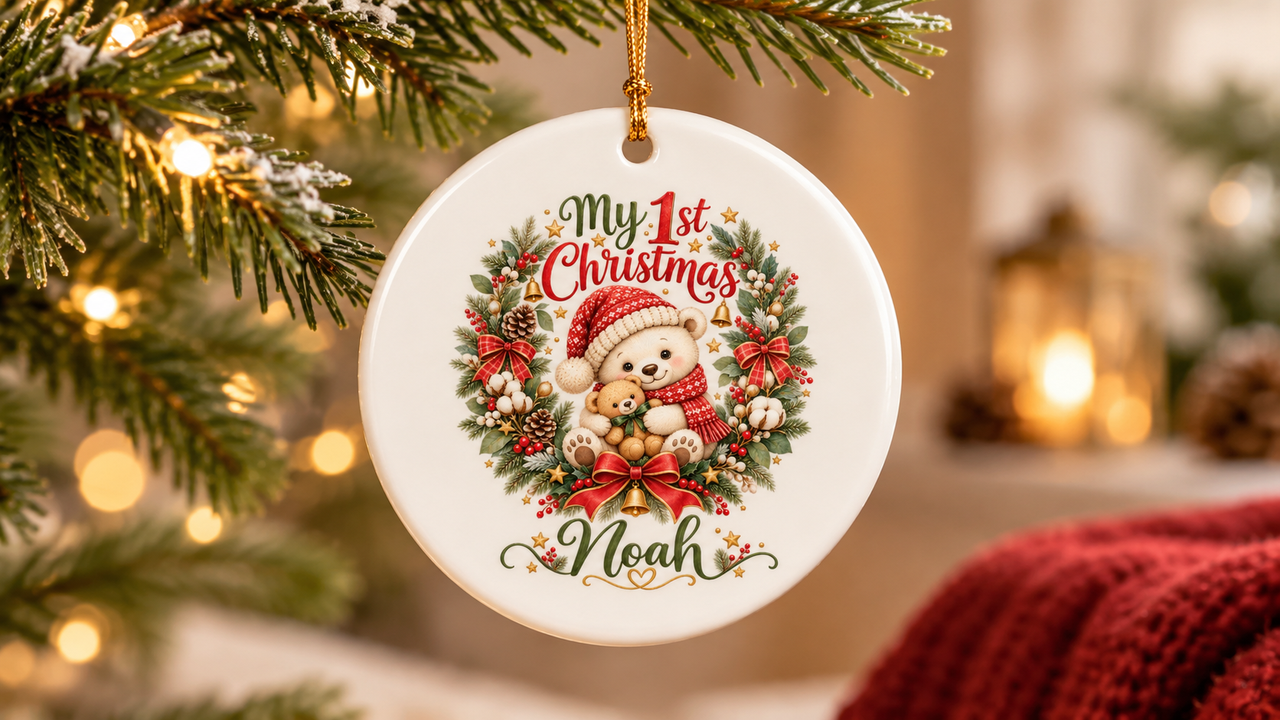
Write the name on paper first and check its spelling. For a gift, confirm capitalization, punctuation, and any accents too. If you want to include a year or short message, plan that at the same time so the name doesn’t take up all the available space.
For a small writing area, consider a first name, initials, or a name on one line with a year below it. Check that a shortened name is one the recipient actually uses.
Practice on scrap before moving to the ornament. A curved surface can make spacing harder to judge than a flat sheet, so hold a paper template alongside the ornament to estimate where the lettering will go. Leave room around existing decorations, and don’t draw temporary guidelines directly on a delicate finish unless you know they can be removed without affecting it.
After lettering: dry first, correct carefully
Keep the fresh writing from touching other surfaces while it dries, and follow the marker manufacturer’s directions before handling it. A line that looks dry may still need more time under those directions.
If a letter goes wrong, pause before reaching for a remover. A product that removes the writing may also affect the ornament’s finish. Check the instructions for both the ornament and the marker; if you can’t establish a suitable correction method, leaving the mark alone or using a separate tag may be preferable to risking the keepsake.
When to use a tag or choose personalization instead
A tag is a practical choice for an old, fragile, sentimental, or unknown-finish ornament. Write and check the name before tying the tag loosely to the existing hanging loop. Unlike writing on the ornament, a misspelled tag can be replaced without working on the keepsake itself.
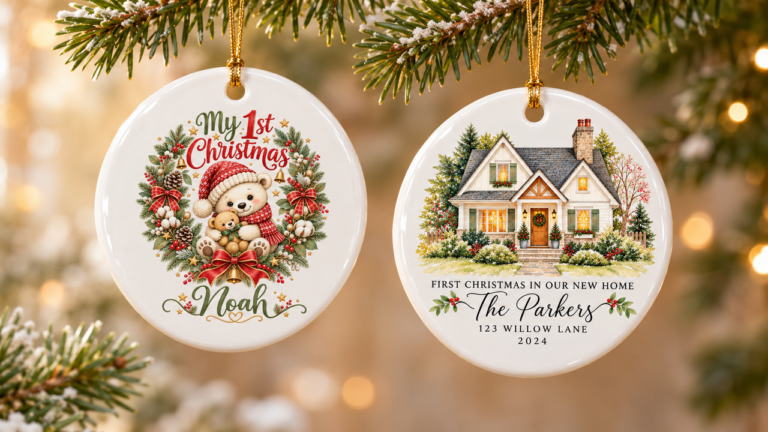
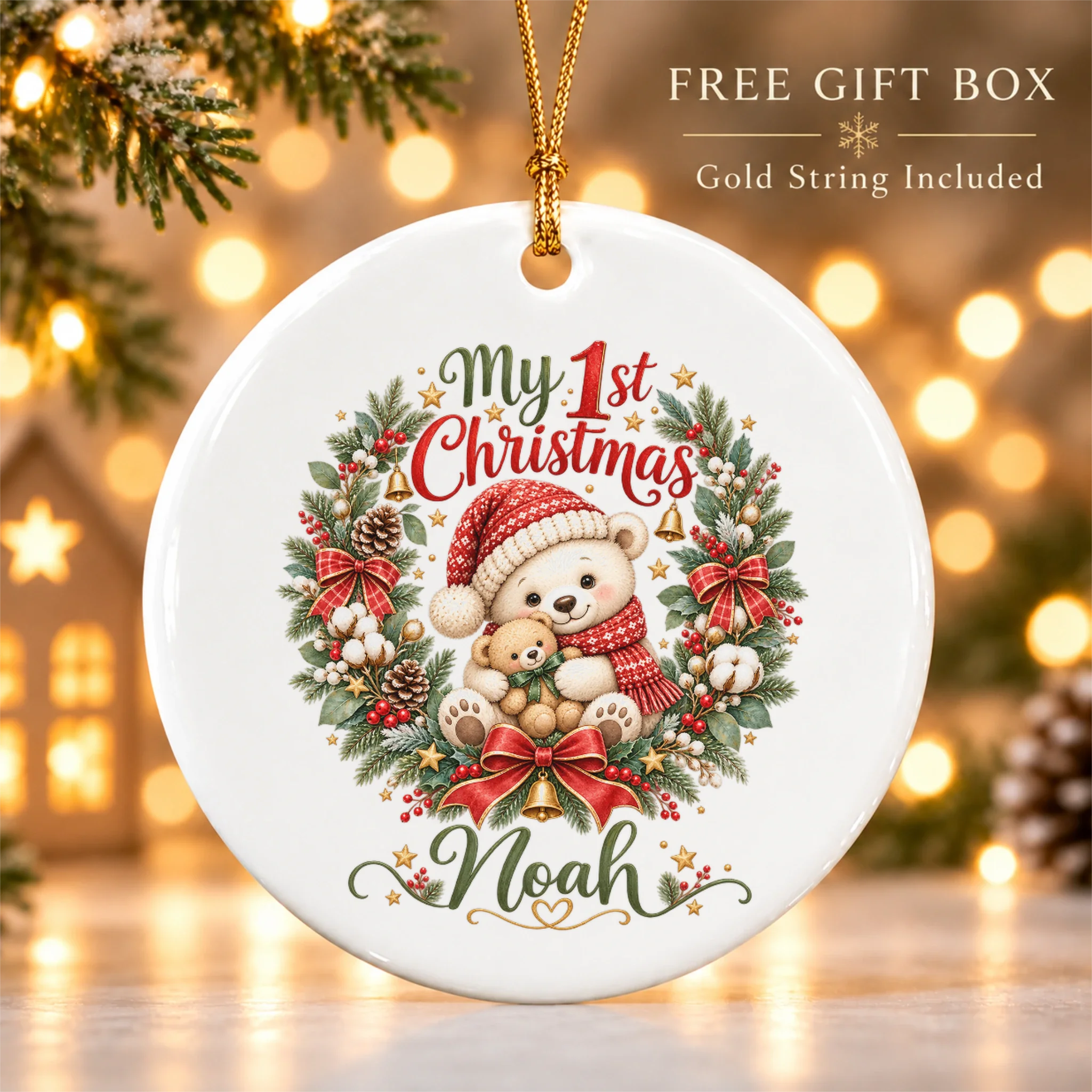
If you’d rather not hand-letter an ornament, a personalized baby’s first Christmas ornament or a personalized new-home ornament may suit the occasion. Review each listing to see what personalization is available; don’t assume a particular name or date field is offered.

For help deciding which memory or message belongs on an ornament, see how to choose a personalized ornament that will still matter next year.