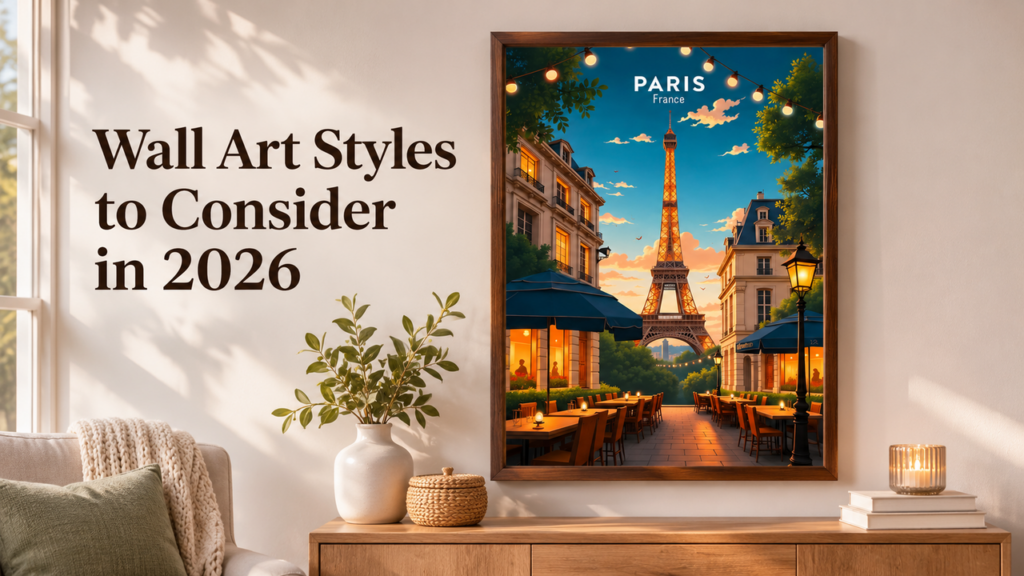
For a fresh-looking room in 2026, consider a statement piece, abstract art, textured or textured-looking work, or a travel-inspired scene. Each offers a different way to make a wall feel more personal: statement art creates a focal point, abstract art sets a mood, texture adds visual interest, and destination art connects a room to a place.
These are ideas to explore, not a verified ranking of the year’s most popular styles. The best choice depends less on a trend label than on what you want the wall to do and what you’ll enjoy seeing every day.
Four wall art directions to consider
Statement art: create a focal point
A statement piece gives the eye somewhere to land. It can work above a sofa, in an entryway, or on a wall that feels unfinished despite the furniture around it.
A statement doesn’t have to be loud. A single work can stand out through its scale, contrast, subject, or placement. The tradeoff is that it will attract attention, so choose something you like looking at rather than something selected only to fill a gap.
Try it if: Your room feels visually quiet and you want one clear focal point.
Think twice if: There is already a feature you want to highlight, such as a fireplace or patterned accent wall. Art can still work nearby, but a more restrained piece may make the room feel less crowded.
Abstract art: focus on mood and form
Abstract work puts shapes, color relationships, and overall mood ahead of a recognizable subject. It can leave room for different interpretations, which may appeal in a shared space where people have different tastes.
Start by deciding whether you want the art to blend in or create contrast. A quiet composition may sit comfortably with patterned furnishings; a more energetic one can give a restrained room a focal point. Look at it alongside the rest of the room rather than choosing solely on a screen.
Try it if: You want to create a mood without depicting a specific place or object.
Think twice if: You want the wall to tell a literal story about a trip or destination. A recognizable scene may be more satisfying.
Tactile or textured-looking art: add another layer
Art with actual texture or a textured appearance can add visual interest to a room with simple walls and furnishings. The distinction matters: an image that *looks* textured is not necessarily a work with a raised surface.
If physical texture is important to you, check what a listing says about the work rather than assuming from an image. Also consider what surrounds it. Near patterned wallpaper, detailed shelving, and several decorative objects, a quieter piece may provide a welcome break.
Try it if: The room feels flat and you want more visual depth.
Think twice if: You specifically want a raised surface but the listing does not confirm one.
Travel-inspired art: bring in a sense of place
A city, landmark, landscape, or street scene can connect a room to a real or imagined journey. Travel art is useful when you want a recognizable subject rather than a purely abstract mood.
The tradeoff is specificity. A destination that matters to you can be rewarding to live with, while a place chosen only because it is recognizable may feel less personal over time. In a shared room, ask which places matter to the people who use it.
Choose a travel subject
You don’t need a travel-themed room to enjoy destination art. Start with the type of connection you want the piece to create:
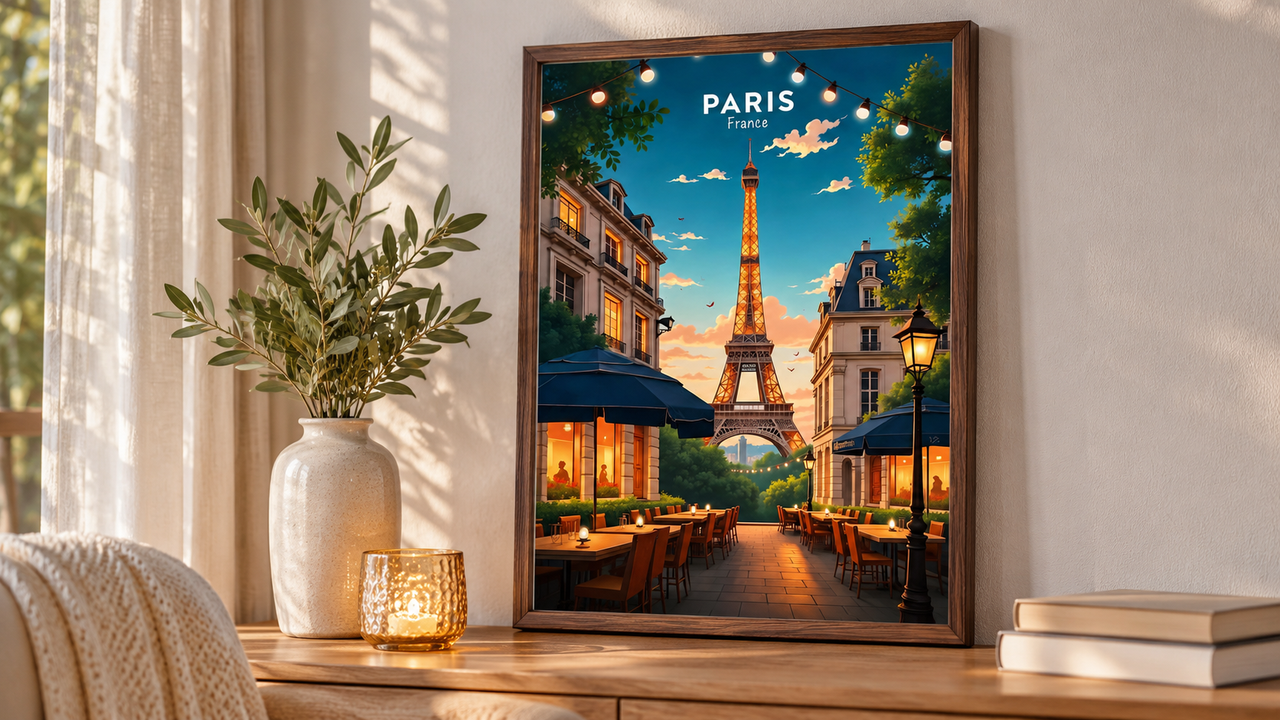
- A recognizable landmark: Paris Eiffel Tower wall art is a place to start if you want a specific, readily identifiable subject.
- A scene associated with a city: Venice canal wall art offers a different kind of destination subject. Consider a scene when you want to evoke a setting rather than focus on one structure.
- A broader destination: Beijing wall art references the Great Wall, Forbidden City, and Temple of Heaven. It’s an option to explore if your interest extends across several places associated with the destination.


Each is a single wall art listing. Review the artwork and listing details against your space before deciding. A destination piece can sit alongside books, family photographs, or other art you already enjoy; it doesn’t need an entire room built around it.
For help selecting a place with personal meaning, see how to choose travel-inspired wall art for a meaningful room.
Plan the wall before you buy
A style can appeal on its own and still feel awkward in a particular location. Planning helps you distinguish a subject you love from a piece that will also work in the space.
Measure the usable area
Measure the wall space you intend to use, not just the entire wall. Note nearby furniture, doors, switches, and anything else that affects placement. If the art will sit above furniture, consider its relationship to that furniture as well as to the wall.
Then compare those measurements with the dimensions listed for the piece you’re considering. Art that seems substantial on a screen can feel small on a large wall, while a piece that fills most of a narrow area may leave little breathing room. There is no single correct proportion: decide whether you want a concentrated focal point or a more open arrangement.
Test placement with paper
Cut paper to the proposed dimensions and temporarily position it on the wall. Step back and look from the room’s usual entry point and from where you normally sit. Move the paper until the placement feels connected to the furniture and comfortable from those viewpoints.
For a gallery wall, try one paper shape first, then add others. Leave enough space between them for the arrangement to feel deliberate rather than crowded. If you plan to combine artworks, check each listing separately; don’t assume the pieces are sold together.
Check the visual balance
Look at what already competes for attention. A busy bookcase or boldly patterned rug may make a simpler artwork easier to live with. On a quiet wall, a more detailed scene or a larger focal piece may provide the interest you’re missing.
If you’re considering several pieces, look for a relationship between them, such as a shared subject or a similar level of visual detail. They don’t have to match. Test the arrangement before making permanent holes, and consider removing a piece if the wall feels crowded.
Make the choice
If the room needs a focal point, start with one statement piece and test its footprint. If you want an open-ended mood, compare abstract work with your existing furnishings. If the room feels flat, explore texture while checking whether it is physical or only visual. And if a particular place matters more than a general look, let that destination guide your search.
Whichever direction you choose, prioritize a subject you want to keep seeing and a placement that works in your actual room. A thoughtful fit is more useful than choosing a piece simply because it carries a 2026 label.