For a nursery in 2026, consider a nature-inspired theme, an adaptable color palette and decor that can change as your child grows. Woodland animals, safari illustrations and playful accents are useful starting points, although we can’t verify which looks are the year’s most popular trends. Choose the elements that suit your room and routine rather than feeling pressured to recreate a particular look.
A way to start is to make three decisions: choose a background color, identify the furniture you need, and pick one visual feature—such as a piece of art—to give the room personality. You can add smaller details once you know how those choices work together.
Start with a color direction
A nursery doesn’t need a designated “baby color.” Choose a combination you enjoy living with, then decide where to use it. These approaches offer different tradeoffs:
- Warm neutrals: Cream, tan and soft brown can create a quiet backdrop and leave room for artwork or accents to stand out. If the room feels too plain, introduce contrast with a darker tone or a small pattern.
- Muted colors: Consider a softened green, blue or peach alongside a neutral. This gives the room more color without requiring every item to match exactly.
- A playful accent: Keep larger choices relatively simple and introduce a brighter color in a few changeable details. This gives you room to experiment; repeating the accent in more than one spot can make the choice feel intentional.
Before committing to paint, view samples in the room at different times of day. Place them near furniture or other items you plan to keep, rather than judging them against an empty wall alone. If you’re undecided, start with the background color and add accents gradually.
Any of these palettes can work for a boy’s nursery, a girl’s nursery or a room intended to feel less tied to gender. Choose colors for the atmosphere you want, not because a theme seems to require them.
Choose a theme with room to grow
An animal or storybook direction can make a room feel cohesive without turning every surface into a matching scene. Start with one feature you like, such as an illustration, and let it suggest a few colors or motifs for the rest of the room.
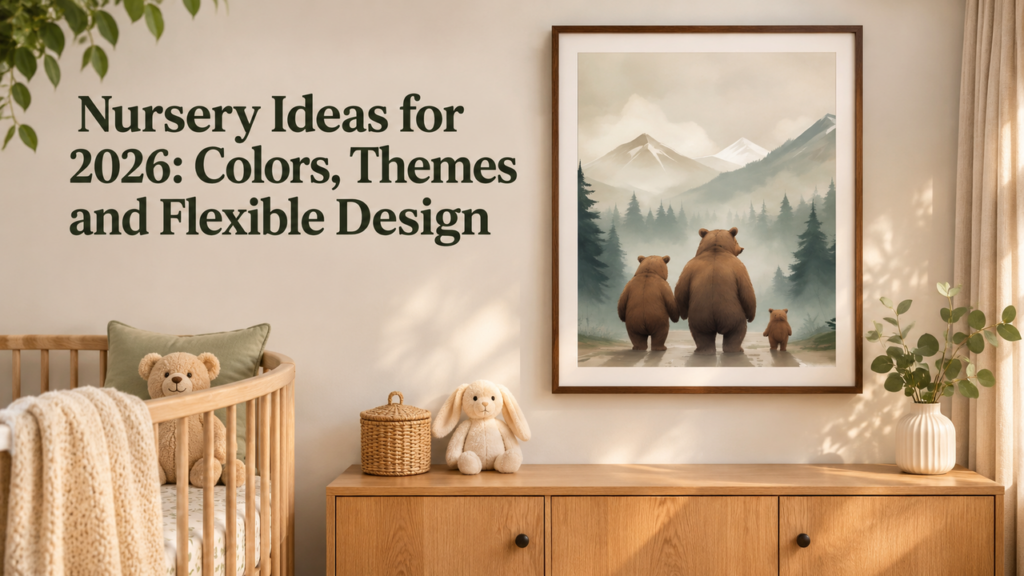
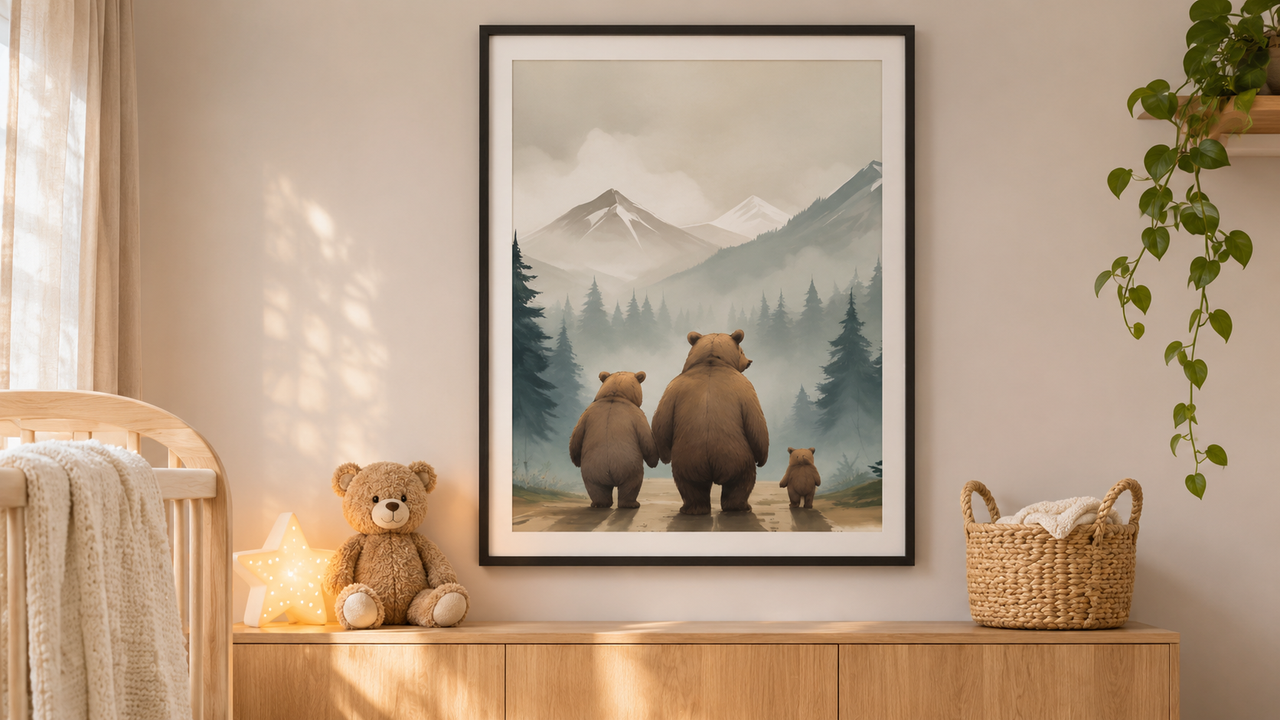
For a woodland feel, pair a nature-inspired palette with an animal illustration. A single piece of bear family wall art can be a starting point; the rest of the room can remain simple enough to change later. This approach suits a parent who likes a theme but doesn’t want every major purchase tied to it.

For a safari direction, use an animal image as the focal point and repeat one or two coordinating colors elsewhere. Giraffe nursery wall art is one option to consider. You don’t need to add every safari animal to make the idea recognizable.

For a storybook feel, think about the mood you want rather than a specific character: gentle and quiet, colorful and playful, or a little more adventurous. Mix illustrations with simple shapes or patterns, and leave space to add your child’s own artwork later.
The tradeoff is commitment. A strongly themed room can feel instantly coordinated, while a lighter touch makes individual elements easier to swap. If you’re unsure, keep the theme mostly in the decor rather than making it the basis of every major purchase.
Let furniture function guide the style
You don’t need to predict a furniture trend to choose a room that looks considered. A simple approach is to start with the pieces you need, then decide how closely you want their finishes and shapes to coordinate.
A more streamlined look uses fewer visual details and a limited finish palette. A mixed look gives you more freedom to incorporate pieces you already own, though it may take more thought to make them feel connected. Either can work: repeating a color or choosing a consistent general style can tie different pieces together without making everything identical.
Before buying, sketch the room and mark the door, windows and any features you need to work around. Consider where you’ll tend to the baby, where you’ll sit and how you’ll reach the things you use frequently. When comparing furniture, ask:
- Does it fit and leave a workable path? Measure the available space and check the dimensions of any piece you’re considering before ordering. Account for doors and drawers opening, too.
- Does the storage match the task? Open storage keeps items visible, while closed storage can make visual clutter less noticeable. A mix may be more useful than either approach alone.
- Could it have a role later? A dresser you like beyond the nursery years may offer more flexibility than a piece chosen solely for a short-lived look.
- Can it work with what you already have? A limited palette can help mixed furniture feel intentional, even when the pieces don’t match exactly.
A visually simple room can be appealing, but don’t sacrifice accessible storage just to keep a photograph tidy. Plan a place for the items you expect to reach for often, then decide what can be stored farther away.
Plan wall art before making holes
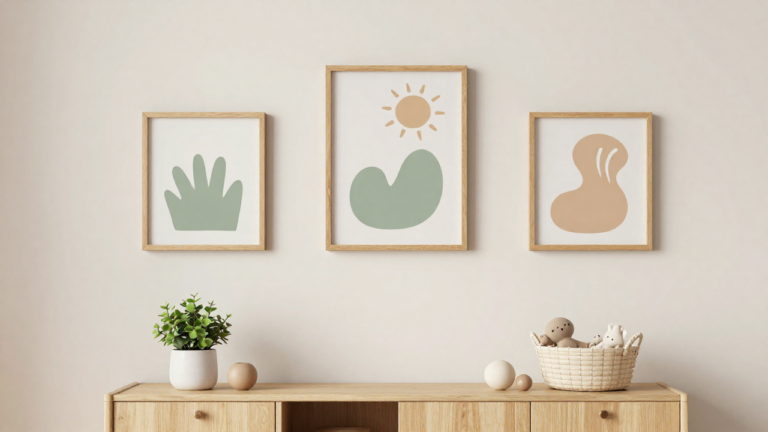
A gallery wall can bring a palette and theme together, but one piece can be just as effective. If you want a group, arrange paper templates on the wall first. Try a compact cluster, then a looser arrangement, and step back to see which suits the furniture and available space. Leave some breathing room between pieces so the display doesn’t feel crowded.
You don’t have to fill the whole wall at once. Start with one image and leave space to add another later. If you’re combining animal art, look for a relationship between the pieces—perhaps a shared subject or a color that also appears elsewhere in the room—rather than assuming they need to match perfectly.
Consider a location away from the crib and other places where the baby sleeps or spends time. Before installing furniture or decor, consult current Consumer Product Safety Commission guidance and the relevant product instructions; appearance alone isn’t a safety plan.
For more help choosing a location and arranging pieces, see how to plan a nursery gallery wall that grows with your child.
Keep seasonal touches easy to change
If you’re preparing a nursery in winter, you can aim for a cozy atmosphere without committing the entire room to a winter theme. Begin with a palette you’ll enjoy year-round, then bring in a seasonal accent or two. Later, those accents can change while the main furniture and artwork stay in place.
The same principle helps with any idea you’re not quite ready to commit to: try it in a small, replaceable detail first. Build the room around the layout and colors you like, and let the theme develop over time.