Start with a wall you want to use and a subject you’ll enjoy seeing regularly. Measure the available space, test the artwork’s proposed dimensions, and view the placement from where you normally sit or stand. The right piece doesn’t have to match everything in the room; it should feel meaningful to you and work with the way you use the space.
Consider the room before choosing the art
Decide what you want the artwork to do. A piece above a living-room sofa might be a focal point or a conversation starter. In a bedroom, you might prefer a quieter image—or a bold one that makes the room feel more personal. Neither approach is a rule.
Think about viewing distance, too. A detailed image may reward a closer look in a hallway or beside a reading chair. A simpler subject may be easier to appreciate from across a room. If the space already has busy patterns, shelves, and objects, consider whether you want the art to add to that energy or give the eye a place to rest.
You don’t need to fill every blank wall. Leaving some space open can help the pieces you choose stand out and gives you time to discover what the room needs.
Choose a subject you want to live with
Art can connect to a favorite place, a memory, a visual style, or music you return to. If you’re unsure what you like, save a small selection of images and look for what they have in common. You might notice a preference for portraits, abstract shapes, expressive typography, or a particular mood rather than one subject.
Music-inspired wall art is one way to bring a personal interest into a room without making the whole space follow a theme. A Pink Floyd “Wish You Were Here” poster could be a starting point if the album has meaning for you. A Led Zeppelin Icarus poster offers a different music connection. Compare the listing images with the feeling you want in the room rather than choosing on the artist’s name alone.

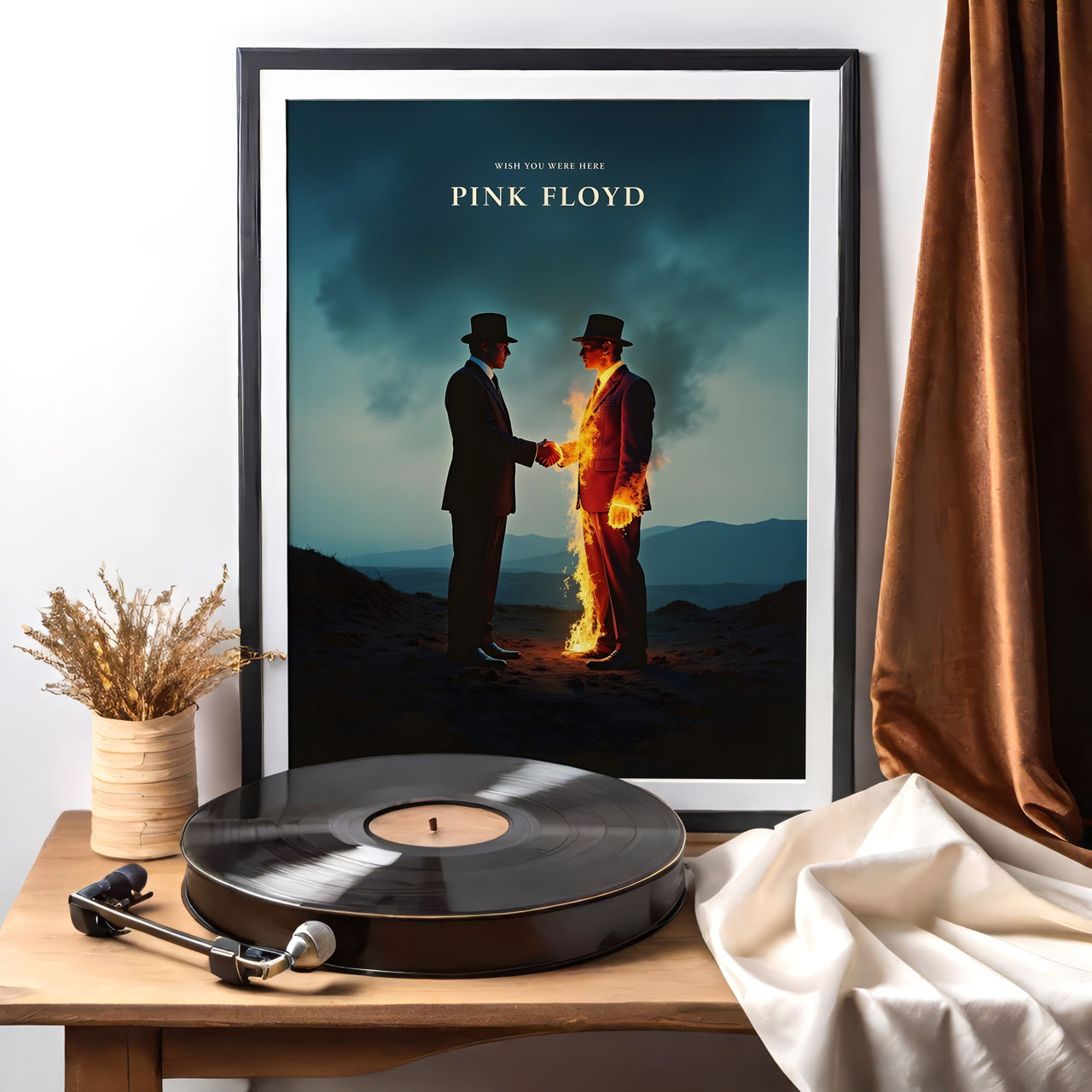
If you share your home, ask the other people who use the space which subjects they enjoy. You don’t have to agree on every piece, but a prominent shared wall is a good place to find common ground.
Test the scale before you buy
A piece that looks right on a screen can feel different on your wall. Measure the usable wall area and any furniture beneath it, noting nearby doors, shelves, switches, and other features. Check the listing for the dimensions of the option you’re considering, and account for a frame if you plan to add one.
Cut paper to the proposed outside dimensions or outline them with removable tape, checking first that the tape is suitable for your wall. Step back and look at the shape from the room’s main viewing positions. Try moving it up, down, or sideways, then leave the outline in place briefly if you’re undecided.
For a large wall, compare these approaches:
- One larger piece: A straightforward choice when you want one clear focal point. Check that it relates to the furniture below instead of feeling lost on the wider wall.
- A grouping of smaller pieces: Useful if you already have art you like or want to add pieces over time. It takes more planning to make the arrangement feel intentional.
- A smaller piece with open space around it: A quieter option when the room has other focal points. Try it near a reading area rather than assuming it must fill the wall.
There is no universal proportion that guarantees a good result. If an arrangement feels cramped, reduce the number of pieces or try a different wall. If it feels disconnected, adjust the grouping or placement before assuming you need more art.
Use color and framing as connections, not strict rules
Artwork doesn’t have to repeat every color in a room. Instead, look for one connection that feels comfortable: perhaps a color already present in a rug or cushion, a similar overall mood, or a frame treatment that relates to the furniture. A contrasting piece can also work if you want the art to stand apart.
When comparing a piece with the room, look at the listing image on more than one screen if possible and allow for the fact that screen colors can vary. Think about the whole presentation, including any frame or mat you intend to add. A simple frame may let the image take the lead; a more noticeable one becomes part of the composition.
Make different pieces work together
Choose one or two things to repeat across a grouping: a frame treatment, a color, a subject, or a consistent amount of space between frames. The pieces can differ in other ways.
For a coordinated look, try similar frames and a tidy arrangement. This can help unrelated subjects feel like a collection, though it may feel more formal. For an eclectic look, mix frame styles and subjects while keeping another element, such as spacing or a shared color, reasonably consistent.
Lay a proposed grouping on the floor first, or use paper templates on the wall. Photograph the arrangement so you can compare alternatives. Treat the whole group as one composition: look at its outer edges and how it relates to the furniture, not just whether each individual frame is straight. Decorating formulas based on particular numbers of objects can be starting points, but they aren’t requirements.
Check placement, light, and practical use
Look at the proposed position from the places where you’ll actually see it: the sofa, the doorway, or your usual seat at the table. The best height is one that feels comfortable in that setting, not a fixed measurement applied to every wall. Above furniture, check that the art and furniture feel visually connected without getting in the way of daily use.
Notice glare at different times of day, especially if the artwork will be behind glass. Moving the piece or adjusting its position may make it easier to see. Also consider whether doors, lamps, or tall objects will block it.
Plan the hanging method for your wall and the weight of the finished piece. Check the hardware instructions and the wall before making holes; if you’re unsure what is appropriate, ask a qualified local professional. If you rent, check what your lease permits before choosing a mounting method.
Art for a small coffee corner
A coffee corner can be a good place for a piece that feels playful or personal, even if it has nothing to do with coffee. Make sure the proposed placement leaves room to use the equipment and nearby cabinets or shelves. Consider exposure to heat, moisture, and splashes when deciding where to hang it.
A single piece may be enough in a compact area; a small grouping can work if it doesn’t compete with everything stored nearby. For more help with that specific space, see how to choose art for a home coffee corner.
Before ordering, review the listing details and compare them with your measurements and intended display. If you still like the subject after testing its scale and placement, you have a solid reason to bring it home.