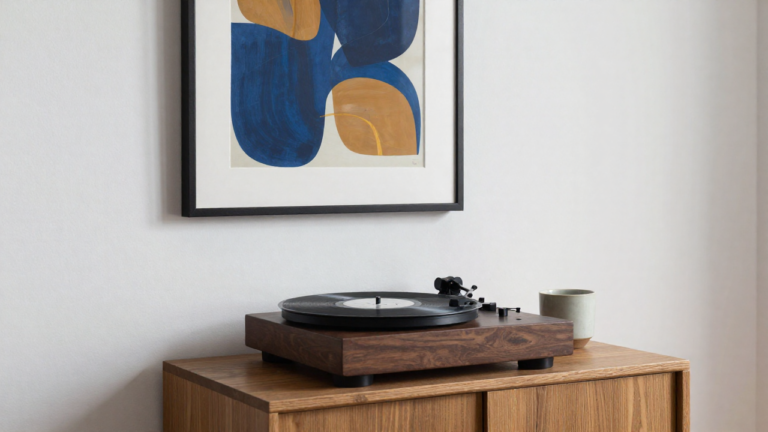
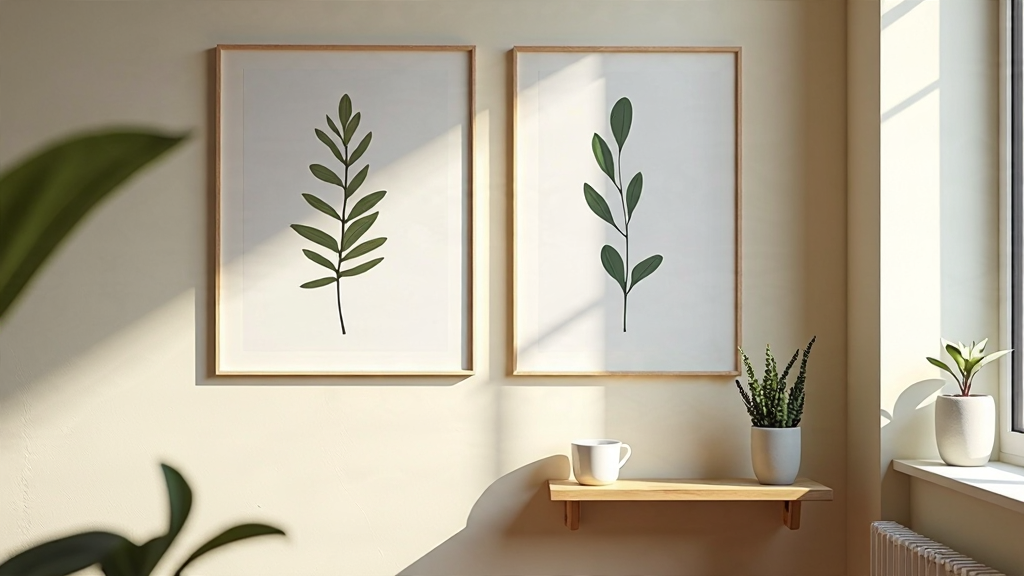
Start with the wall space your coffee station can actually spare, then choose art that suits the room and the mood you want. One piece often works well above a compact setup; a small grouping can suit a wider, less crowded wall. Before buying, test the placement with paper and make sure the art won’t get in the way of cabinets, equipment, or supplies.
Measure the usable space, not just the wall
Treat the coffee corner as a working area first. Note the width of the counter or cart, then identify the clear wall around shelves, cabinets, switches, and outlets. The whole wall might be large, but the useful area for art may be much smaller.
Measure that clear area and sketch it roughly. Include anything that moves or needs access: cabinet doors, an appliance lid, or a shelf you reach across. If the station sits in an open kitchen, also consider how the art will look from the adjoining room.
Cut a paper template to the dimensions of a piece you’re considering and tape it to the wall. Stand where you normally make coffee, then step back and view it from across the room. Check the swing of doors and lids. Keep the paper away from heat and appliances, and remove it before operating equipment.
Check the listing dimensions before ordering. If you plan to frame the art, account for the frame as well: the finished piece may occupy more wall space than the artwork itself.
Choose a scale that suits the station
For a compact counter, one piece can give the eye a clear place to land without adding visual clutter. On a broader sideboard or open wall, a wider piece or a small grouping can help connect the coffee station to the space around it.
You may hear that wall art should be roughly two-thirds the width of the furniture beneath it. Treat that as an optional starting point, not a rule. It can help you judge whether a piece feels lost above a wide counter, but shelves and appliances may make a narrower arrangement more practical. A deliberately small piece can also work in a tight alcove.
If you’re considering several pieces, test the full arrangement with paper, including the gaps between them. If the templates compete with mugs, jars, and equipment, remove one and compare again. A grouping needs enough breathing room to feel intentional.
The “70/30 rule” isn’t a reliable shopping formula for this decision: people use it to describe different kinds of design balance. You don’t need to calculate a ratio to make a coffee corner work.
Pick a subject that sets the mood
Coffee imagery is an obvious fit, but it isn’t the only way to make the area feel intentional. Start with the atmosphere you want:
- A café feel: Choose coffee-related illustrations or typography if you want the station to be immediately recognizable. Simpler imagery can work well when the counter already has a lot going on.
- A quieter corner: Abstract art, a landscape, or a simple graphic can give the wall character without making coffee the dominant theme.
- A personal spot: Art connected to music, travel, or another interest can make the station feel like part of your home rather than a miniature café.
For a music-focused corner, the Pink Floyd Wish You Were Here wall art is one option. It’s a music piece rather than coffee-themed decor, so it makes sense if you want the wall to express an interest beyond brewing. Review the listing to decide whether it suits your space.

Coordinate without making everything match
Look at the room around the station before settling on art. Is the setup tucked into a calm kitchen, or does it sit beside a colorful dining area? The art doesn’t have to duplicate the room, but one connection can help it belong: a shared color, a similar frame style, or a compatible visual mood.
Consider the counter, too. If cups, packages, and appliances create a busy scene, simpler artwork may give the eye a rest. If the station is mostly clear, a more expressive subject can become the focal point. Either approach works; the tradeoff is how much visual activity you want in a small area.
Compare options from your usual viewing distance, not just up close. A detail you love on a screen may be hard to appreciate across the room, while prominent lettering may feel busier than expected in a narrow nook.
Place art for everyday use
Choose a spot away from routine splashes and steam. Notice where water lands when you fill the machine and where steam rises during use; a neighboring wall may be a better choice than the space immediately above an appliance.
Leave enough room to operate the station and clean the surrounding area. If you use a shelf for supplies, check that taking items down won’t repeatedly bump the frame. If you plan to lean art instead of hanging it, make sure it is stable and doesn’t take up counter space you need for brewing.
Before mounting, check the wall surface and choose a method suitable for both the wall and the weight of the piece. Follow the mounting hardware instructions, and check any restrictions that apply if you rent. Review the listing rather than assuming a particular piece is ready to hang.
A small-space example
Imagine a coffee cart beside a kitchen cabinet, with a shelf above the mugs. Instead of filling every open patch, try one paper template in the clear area beside the shelf. Check that the cabinet door opens and that steam from the machine won’t rise directly onto the proposed art.
If the template feels cramped, move it to an adjacent wall or try a smaller piece. Pick a subject that connects to the kitchen’s mood, and let the mugs and equipment provide the coffee theme. The corner can feel distinct without sacrificing the cart’s working surface.
Quick checklist before you choose
- Measure the clear wall and check the artwork’s listing dimensions.
- Test a paper template and check the movement of doors and lids.
- Decide whether one focal piece or a grouping suits the available space.
- Choose a subject you enjoy and a connection to the surrounding room.
- Keep the placement clear of routine splashes, steam, and frequently handled supplies.
- Confirm the wall and mounting method are appropriate before hanging.
For more subject ideas, browse the Cafe & Bar wall art collection, then use the same measurements and placement checks to narrow your choice.