Start with one ornament that represents your family’s first chapter, hang it together, and make a short note about why you chose it. Next Christmas, add another ornament—or revisit the first one if adding something new doesn’t feel right.
The tradition can take just a few minutes. It doesn’t require a matching collection, a major milestone, or a purchase every year. The goal is to create a small moment you’ll want to return to as your family changes.
Decide what you want to remember
Before choosing an ornament, talk about what you’d like the tradition to celebrate. You can use the same approach every year or let it change over time:
- A shared year: Choose something that reminds you of life together, whether the year was eventful or ordinary.
- A milestone: Mark a wedding, a baby’s first Christmas, a move, or another event that matters to you.
- An everyday memory: Pick a symbol of a favorite activity, a family joke, or a place you enjoyed together.
A new family doesn’t have to fit a particular definition. You might be newly married, parenting together, blending households, or beginning a shared life without a wedding or children. Your first ornament can celebrate the family you are now, rather than a milestone you feel expected to have.
Try asking: “When we look back on this Christmas, what will we want to remember?” If you have different answers, choose one for the ornament and save the other for a note. Or let one person choose this year and another choose next year.
Choose the first ornament
Your starting ornament can be new, handmade, or one you already own. The connection matters more than whether it was designed for the occasion.
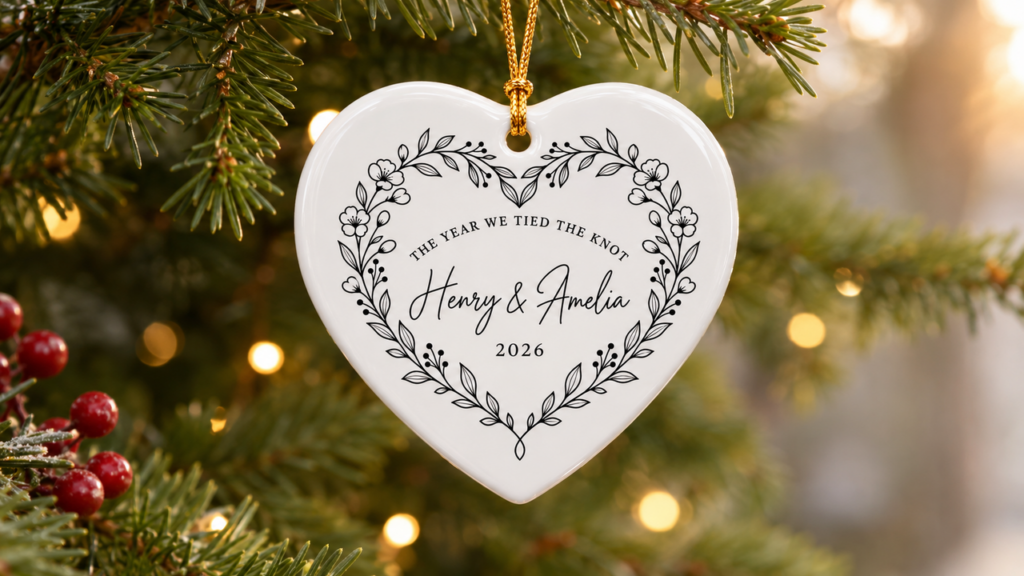
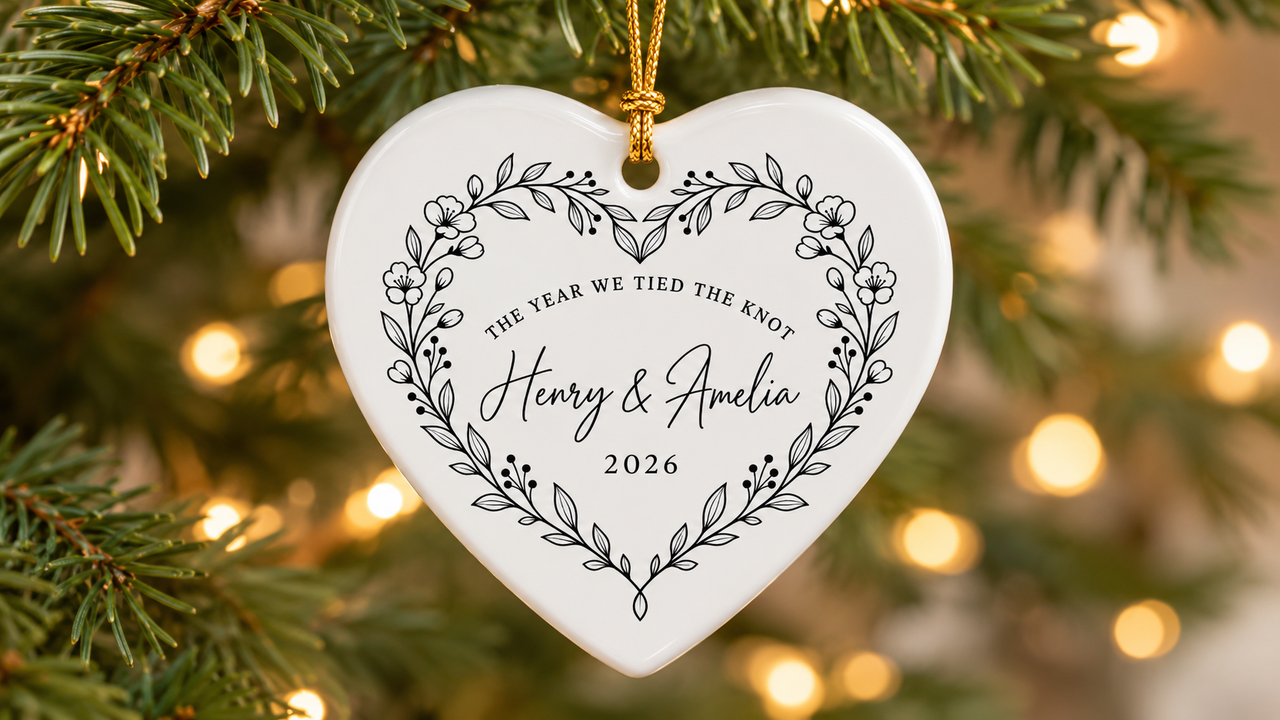
If you’re marking a wedding, a personalized wedding ornament can represent the start of married life. A personalized baby’s first Christmas ornament is an option for that chapter, while a personalized new-home ornament can mark a move into a shared home. Each is a single ornament; choose an occasion that fits rather than treating them as a set you need to collect.
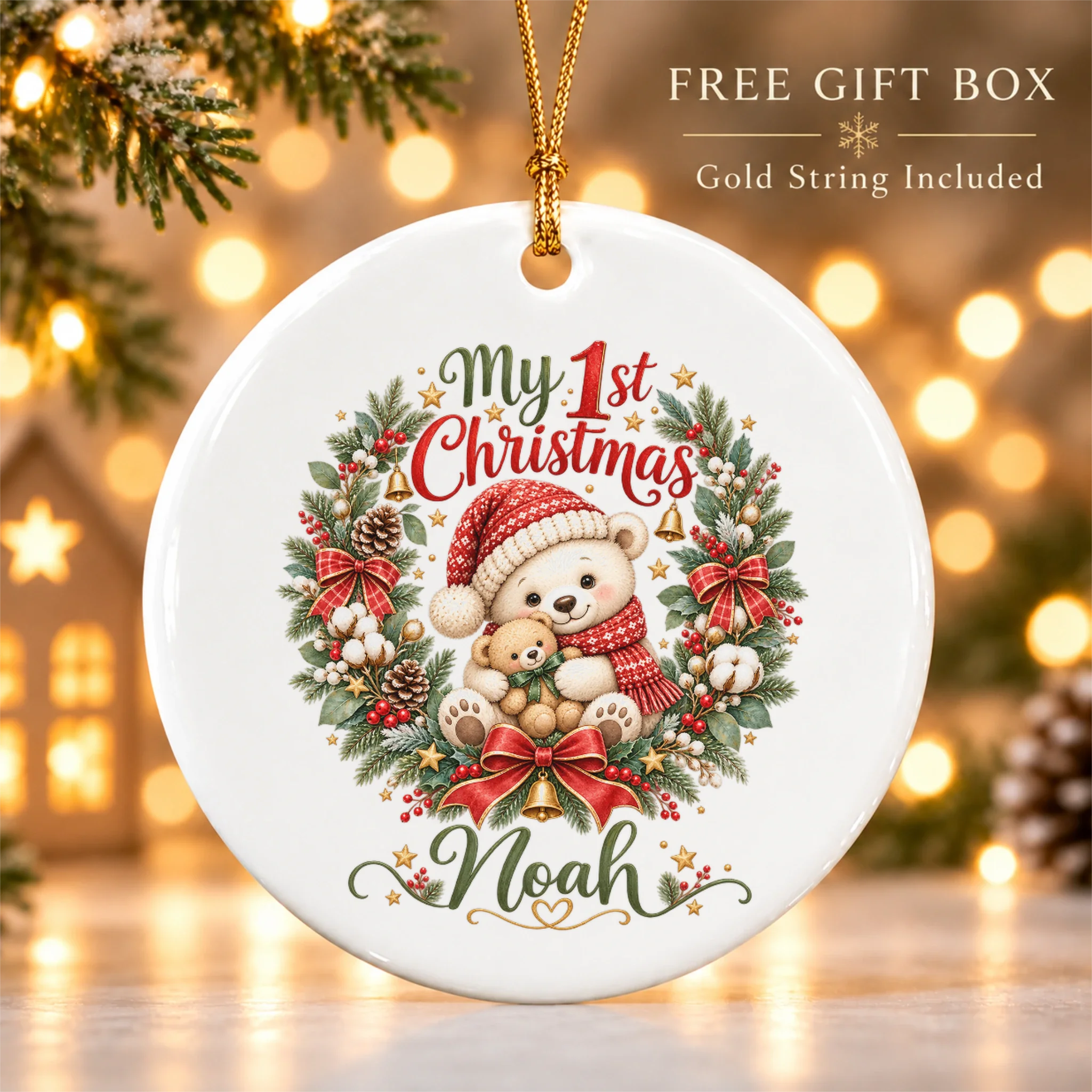

Personalization is available for these options, but the details may differ by listing. Review the available choices before deciding what you want an ornament to say or represent. If you enter personal details, check spelling and dates carefully before placing the order.
You can also begin without buying anything. An ornament you already own might remind you of your first Christmas together, even if it wasn’t originally chosen for that purpose. Or make a paper ornament and keep a separate note explaining what it represents.
If several choices feel equally meaningful, use this tie-breaker: pick the one you’ll be glad to explain in a sentence. It doesn’t have to tell your whole family story on its own.
Pick a ritual you can repeat
Choose a moment that fits into your holiday routine. You might select an ornament while decorating, hang it after a special meal, or put it up on a quiet evening in December. If everyone can’t be together, one person can hang it while others share their memories by phone or message.
A simple ritual could look like this:
- Each person suggests a memory or theme from the year.
- Choose one ornament, make one, or use one you already have.
- Take turns saying why the choice matters.
- Display it and add a sentence to your record.
Agree on how you’ll make the choice. Taking turns can make decisions easier, while choosing together gives everyone a say. You could also set a time limit for suggestions and keep the ideas you don’t use for future years. If the arrangement stops working, change it.
If you enjoy opening an ornament as a gift, make that part of the ritual. If gifts add pressure, skip the wrapping. Likewise, you don’t need a Christmas tree: choose another spot in your home where the ornament can be displayed appropriately.
Keep the story alongside it
Years later, the reason behind an ornament may be less obvious than you expect. A notebook, a note on your phone, or a tag stored alongside the collection is enough. You don’t need a scrapbook or a long explanation.
For each entry, consider recording:
- The year you chose or added the ornament.
- Who chose it, if that matters to your family.
- One sentence about the memory it represents.
For example: “Our first Christmas in our shared home. We chose this to remember getting settled together.” Or: “Our first ornament: one we already had, chosen because it reminds us of our first holiday as a family.”
If an event and the Christmas you’re celebrating happened in different years, write both in the note. That way, you can remember when the event occurred and when the ornament became part of your tradition without needing to fit the whole explanation onto the ornament.
Keep the note separate if you’re unsure whether writing directly on an ornament could damage it. For help choosing a writing tool, see what to use to write names on ornaments. When packing decorations away, keep your record somewhere you’ll find it next year. Use storage appropriate to the items you have, and follow any care guidance that came with them.
Leave room for your family to change
A rule that works for two adults may need adjusting as children grow or relatives join the celebration. Young children can help choose between a couple of ideas; older children may enjoy suggesting their own memory. Participation can be an invitation rather than an obligation.
In a blended family, make space for ornaments and rituals each person already values. Hang older favorites alongside the new family’s first ornament, or invite each person to share a story without deciding which tradition takes priority. You can begin a shared collection without replacing what came before.
It also helps to talk about ownership before it becomes awkward. If relatives give ornaments as gifts, decide whether they belong to the recipient or become part of the shared collection. As children grow up, you might ask whether they’d like to take certain ornaments with them, leave them on the family tree, or decide later. A short note about a gift can preserve its story whichever home it eventually belongs to.
Some years will be busy, difficult, or simply not suited to a new purchase. Rehang an existing favorite, make a note without adding an ornament, or skip the ritual and return to it another Christmas. A flexible tradition can still be meaningful—even when the way you keep it changes.