Music-themed wall art can reference a favorite artist or song, depict an instrument or performance, or use musical notation as its subject. To narrow your choices, decide whether you want a specific reference that means something to you or a broader music theme that suits your room.
A band-specific poster can be a personal choice for a fan. Instrument or performance art, by contrast, can express a love of music without committing the wall to one artist. Here’s how to compare the possibilities and choose something you’ll enjoy displaying.
Artist, album, and song references
Artist-specific art is a useful starting point when your connection to the music matters more than a general decorating theme. Think about the reference you want to live with: a favorite album, a particular song, or an image associated with the artist.
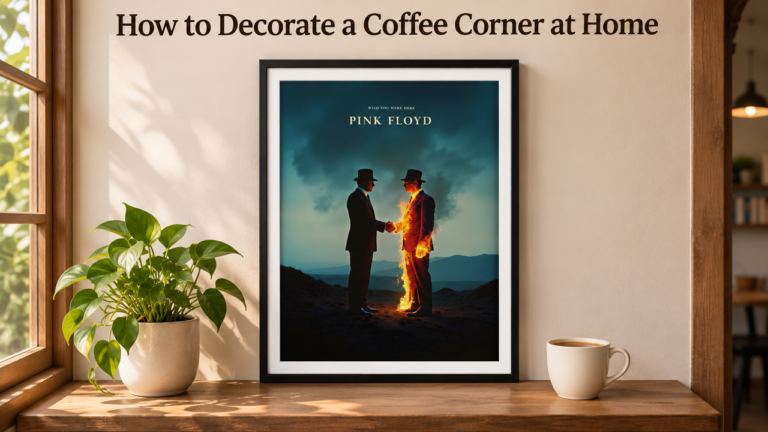
For example, the Pink Floyd Wish You Were Here handshake poster offers a reference to that album. It’s a more specific choice than a general rock-themed piece if *Wish You Were Here* is what you want to celebrate.

A different Pink Floyd reference is the Another Brick in the Wall poster, with its dystopian classroom theme. Choosing between the two starts with the music and subject you prefer. Being a fan of the same band doesn’t necessarily mean both references will feel equally personal.

The Led Zeppelin Icarus poster connects the band with Swan Song and a mythological subject. It’s another direction to consider if you want a rock reference with a symbolic focus.
These are individual wall-art listings. If you want more than one piece, consider each reference separately and review each listing before ordering; don’t assume they come as a set.
Broader music-art subjects
You don’t have to choose a band or album. Music art can also focus on the activity, objects, or visual language of music itself. These are general directions to explore, not a promise that every subject is available in the PrintUnicorn collection:
- Instruments: A guitar, piano, or another instrument can reflect what you play, listen to, or enjoy looking at. This can be a good route when your taste spans many artists.
- Musical notation: Notes or sheet-music-inspired designs suggest music without tying the room to one performer. If a particular composition matters to you, check what the artwork depicts rather than assuming the notation is identifiable or playable.
- Performers and live music: Images of musicians, concerts, or performance spaces can emphasize the experience of playing or listening. Decide whether you want a recognizable performer or a more general scene.
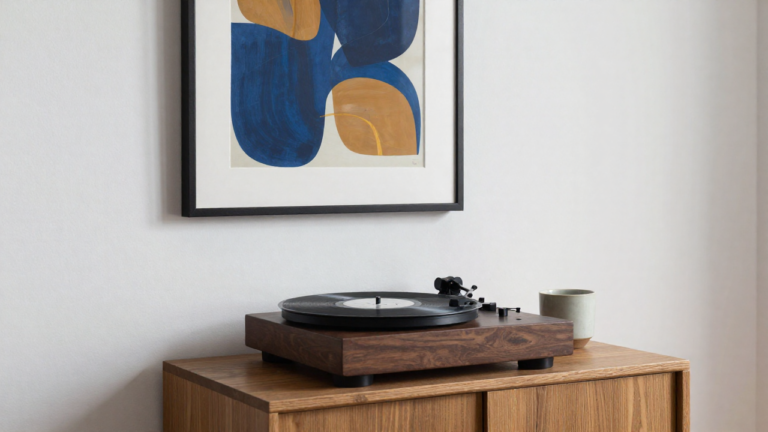
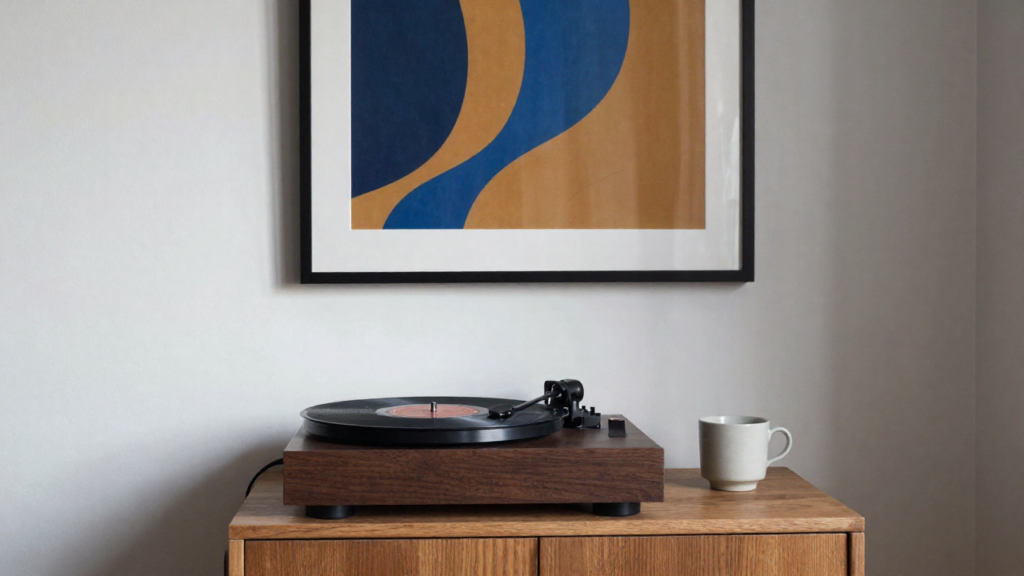
- Records and music equipment: Record players, microphones, and other music-related objects can give a room a listening-focused theme without requiring a single favorite song.
A broad subject leaves room for changing listening habits, but it may not carry the same personal association as a favorite artist or song. If you’re torn, ask yourself which matters more: recognizing the reference each day or having an image that fits a wider range of interests.
Choose art for the wall, not just the theme
Before settling on a design, decide where it will go. A piece beside a record collection may have a different role from one intended to anchor a living room wall.
Measure the usable space. Account for furniture, shelves, switches, and other features that limit the area. If you plan to frame the art, leave room for the frame too. Compare your measurements with the options shown on the listing rather than relying on a room mockup alone.
Think about viewing distance. If you’ll mostly see the art from across the room, consider whether its main subject is clear at that distance. For a piece viewed up close, you may value a reference or detail that rewards a closer look. Review the listing images before deciding.
Consider what’s already nearby. A wall with several photographs or posters may benefit from a connection between pieces, such as a shared music theme. On a quieter wall, one piece can take the lead. You don’t need everything to match; decide whether you want a coordinated display or one that feels collected over time.
Plan a grouping deliberately. One artwork is the simpler choice if the wall is small or you’re unsure what else to add. For a grouping, sketch the arrangement on paper and leave space between pieces. Consider whether you want the artworks to share a subject or simply represent different parts of your music taste. Buy them individually only if you like how they work together.
Picking music art as a gift
Start with what the recipient already enjoys. A favorite artist is useful information, but a favorite album, song, or recurring musical interest can make the choice more specific. If you know they like Pink Floyd but not which reference they prefer, look for clues in their existing collection or ask a discreet question rather than choosing at random.
Their display preferences matter too. Someone who already displays band art may welcome a recognizable reference; someone with little wall space might prefer to choose the artwork themselves. If you’re unsure, a conversation about the intended room can be more helpful than guessing at a design.
For more ways to narrow a gift choice, read how to choose music wall art as a personal gift.
Check the listing before deciding
Once you have a subject and a spot in mind, review the artwork shown, the available options, and what the listing says you’re purchasing. Check the measurements against your wall and confirm any framing or display details that matter to you. If an important detail is unclear, resolve it before ordering rather than assuming it’s included.
To compare available designs, browse the music wall art collection with your preferred subject and intended space in mind.